Not every tragedy is an accident

I wrote a short bio about myself, very cold and generic, and I told about my mission. However, what I told no-one is what drove me to this moment of my life where I chose to speak and try to help others before it happens, before they become victims.

I’ve seen too many dead bodies, too many women beaten to death by their partners. But the one thing I cannot get out of my mind are the desperate cries of two young parents while I carried the body of their eight months old baby in my arms.

It’s infuriating to know that some tragedies can be avoided and yet there are people who let them happen. I’m tired of always being there too late when there is nothing else left to do than to punish those responsible. And even then, the punishment doesn’t equal the pain they’ve caused and the lives they destroyed. It is said that every life is sacred and yet some carry more promise than others.

So no, this isn’t just a blog, it’s a warning.
I can’t undo what I’ve seen but I can make sure you don’t have to see it too. One post at a time. One truth at a time. Starting here.
Because no child should die like that.
And no one should stay silent until it happens again.

ONLINE SAFETY – How to protect yourself in a modern, ever-changing world

     The world around us began to change very fast, giving us little to no time to adapt to its new features. Many actions became automated and were transferred online. These activities birthed a whole spectrum of new challenges for us to tackle and new opportunities for criminals to exploit.

     From financial transactions hijacked by third parties, phishing campaigns targeting your sensitive information, to manipulating and grooming children and trying to recruit them online, the new wave of offences that swept the world is very diverse and volatile, easy to adjust to the counter-measures taken by professionals.

     When we speak about crimes committed over the internet, there are specific particularities regarding children and adults. What you need to know is that criminals exploit vulnerability and they keep testing people until they find their victim. That’s why you need to be informed and to apply simple rules to keep yourself and those you love safe.

     Why criminals target adults versus children:

     When it comes to the two categories, the reasons why they are being targeted are very different. Adults are usually targeted by criminals trying to exploit them financially, so they are often subjected to frauds and scams. Now there is no limitation when it comes to the criminal mind but adults, depending on their age, are more vulnerable in using technology and they are easier to outsmart or deceive.

     On the other hand, children are more prone to be subjected to sexual and trafficking offences. Criminals will try to recruit or groom them so they can later exploit them. They are the most vulnerable category due to their tender age and the lack of life experience. It is a parent’s duty to teach their children safety rules to make sure they don’t fall prey into the wrong hands. Also, recognizing early signs of manipulation in your child may help you sever a connection with a stranger that may have bad intentions. Considering your kid’s age, as a parent, you should make sure that they follow some rules and you should too when it comes to them.

     Quick online safety tips for children:


-Install parental control apps on their phones or smart TVs to limit access to adult content and risky platforms.
-Teach them to reject friend requests from people they don’t know, even if they seem friendly or have mutual contacts.
-Make it clear they must never share or post intimate photos or videos of themselves or others.
-Absolutely forbid meeting strangers they’ve only talked to online. Explain how people can use fake profiles or stolen images to pose as someone else.
-Encourage open communication: if something online makes them uncomfortable or scared, they should tell you right away.
-Watch for warning signs of grooming: secrecy about online activity, isolation, new “friends” they won’t discuss, or receiving unexplained gifts or money.

     If you notice any of these signs, stay alert and consider reporting it. For more guidance, check out our free resource: Child Safety Essentials: How to protect your kids from manipulation & abuse

     Quick online safety tips for adults:

-Avoid entering your card details on unfamiliar sites — some are clones made to steal your information.
-Never allow websites to save your card for future use. These sites are the most vulnerable to cyber-attacks. Use a dedicated low-balance card or virtual cards for online purchases.
Enable two-factor authentication (2FA) on all accounts that support it.
-Double-check email addresses — especially when receiving payment instructions. Look for subtle changes (extra letters/numbers) – this is called Business Email Compromise (BEC).

     One recent case involved a company that regularly communicated with a foreign partner via email. The company received a message that seemed to come from the trusted partner, requesting a payment into a different bank account than usual. Although the email address appeared legitimate, a closer inspection later revealed that a single character had been altered. After the transfer was completed, the company’s bank flagged the destination account as previously linked to fraudulent activity. The funds could not be recovered. This method, often called Business Email Compromise (BEC), is a growing cyber threat that exploits human trust and small lapses in attention.

-Ignore suspicious calls and emails. Phishing aims to steal your data or install malware. Stolen info often ends up for sale on the dark web.
-Don’t post sensitive information online: avoid sharing your ID, bank details, home address, travel plans, or expensive purchases.
-Use strong passwords, a VPN, and secure browsers like Brave or Firefox with privacy add-ons.
-Limit your social media exposure. What you post can be used to profile you: your lifestyle, location, habits, and family details.
-Avoid posting photos of your kids naked, in the bath, or near their school/kindergarten. Every trace online contributes to a digital profile that strangers could abuse.

     Online safety starts with education. By staying informed and taking small steps every day, you can protect yourself and your loved ones online. Share these tips with friends, family, or on social media to help build a safer online community. What are some other tips you would introduce on this list?  

THAT CANNOT HAPPEN TO ME

You can find several resources on this blog to help you stay safe online. However, many of us may fall victims because we believe such things cannot possibly happen to us because of whatever reasons. Therefore I will use my personal example. If you’ve been here before and read the personal biography, you might know that I’ve been working in law enforcement for almost ten years. I worked on different cases, I know the new trends when it comes to frauds and scamming techniques and yet I almost fell to it…story time.

I was home one morning when my mobile phone started ringing. I looked at my screen. I didn’t have the number saved in my contacts list and I couldn’t even recognize the service provider. I was a little suspicious but I answered anyway. It was a pre-recorded female voice, that robotic type that is now being used in most call centers so I thought that they are probably from my internet or phone service provider trying to advertise a better offer.

“Hello! We are calling you on behalf of Revolut Bank. Your Revolut card has been charged 71 euros for Amazon Prime. If this transaction was made by you, you can end this call as an acknowledgement of the payment. If you didn’t make this transaction, press 1 and you will be redirected to an operator.”  I immediately pressed 1 and was waiting for the operator when I remembered that I only use my Revolut card to buy my morning coffee and I don’t keep that much money on it. If I need to make a payment on a site that I don’t trust, I transfer that specific amount on it and I generate a virtual card for that transaction. Logically, no one could have stolen my card data to make an illegal transaction with it and I didn’t even have that amount of money on it. Yet, to be absolutely sure, I put the call on speaker and I opened my bank app. Of course, the card’s balance was the same, no suspicious activity on it. That’s when I became aware of the fact that the same pre-recorded voice was asking me to introduce the four digit security code so I can be transferred to that operator.

I ended the call and searched for that telephone number online. That’s how I learned that the specific number was issued by a virtual mobile phone operator and I couldn’t find any other information regarding it (a WhatsApp/Telegram account linked to it, a profile photo, any social media account linked to it) so I draw the conclusion that the sole purpose for which this number was activated was to scam people.  I reported the number as “scammer” and made the mention that they pretended to be from the bank and asked for security codes/personal information.

The next two weeks I received another two or three calls from different phone numbers but they used the same scam with the Revolut Bank so I just hung up the phone and reported the numbers as scammers.

Aside from those calls, I received a few others. The same general operation yet the messages were different. Still a pre-recorded female voice pretending to represent a company. In one call they told me that I have financial issues with this company and to resolve them, I should add the number to WhatsApp for further discussion. The other calls offered me a very well paid job but to learn more information about it, I needed to add the number to WhatsApp. I reported all the numbers as scammers and blocked them.  

What I hope that you will learn from my personal example is that this type of scam can affect anyone and no one is immune to it. Even though I know the theory and practice better that a regular person, they almost had me. They instill an initial shock and the fear of losing what’s yours takes over and you act without putting too much thought into it and without verifying it. Now even though the amount of money they take may not be too much, the chances of getting them back are very slim. Therefore your best bet remains vigilance and prevention.

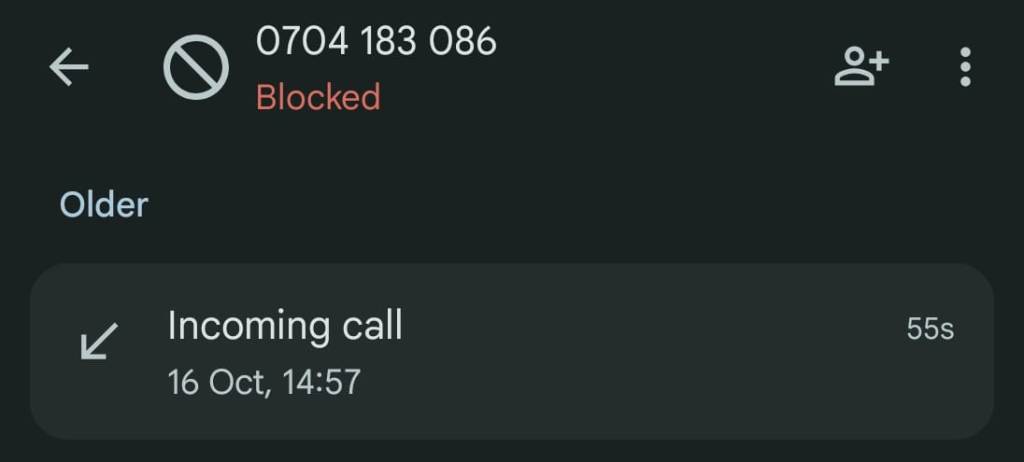
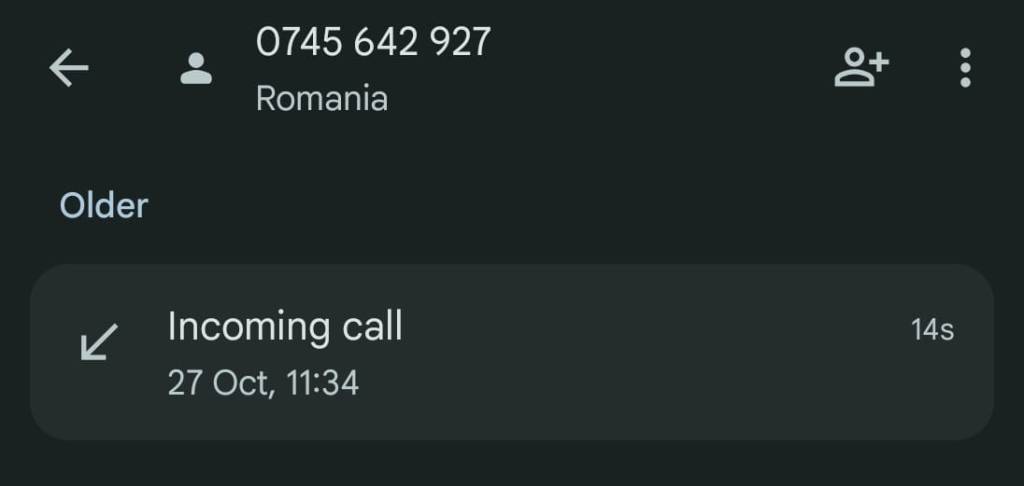
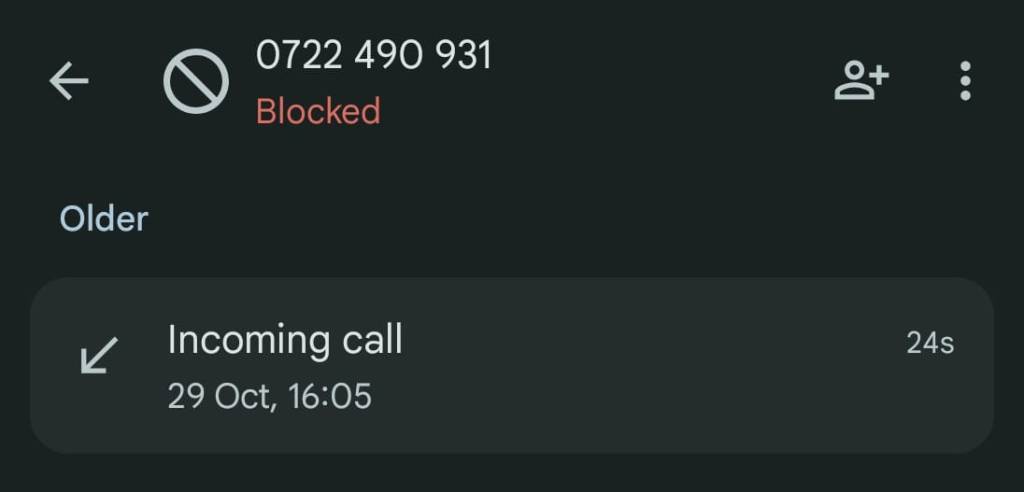
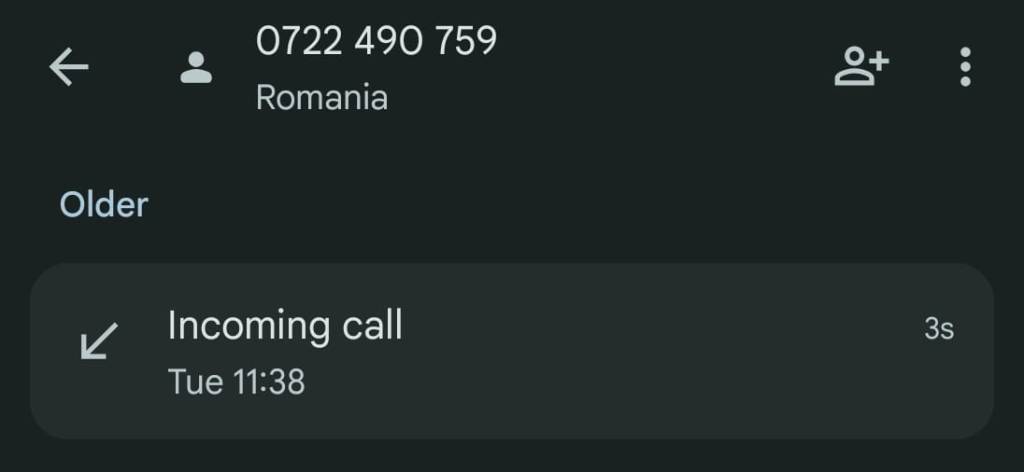
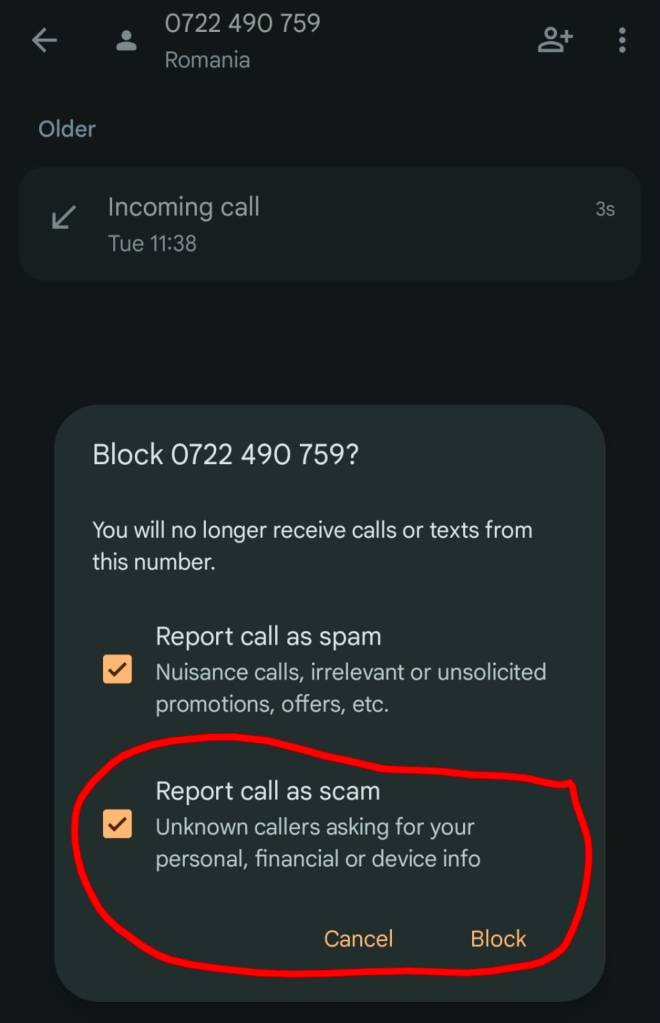
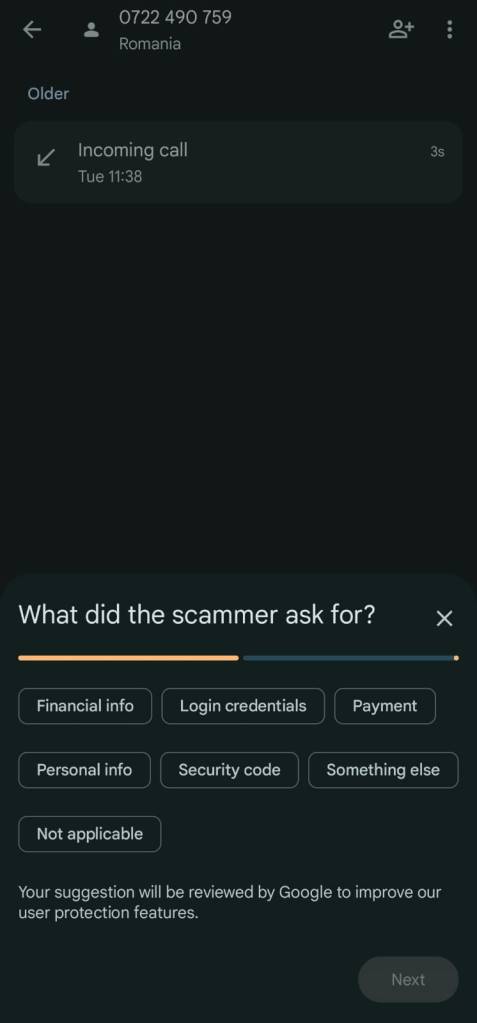
I will upload below screenshots of these calls and how you can report them step by step. It may feel like a small thing to do but if enough people take these actions, it adds that number and its content to a database used to improve your phone’s spam filtering and helps authorities investigate the scammer. The number may be blocked by your service provider or flagged for other users, and the information you provide can be used by law enforcement to take action against scammers and combat future scams.

To report these suspicious numbers is fairly easy and the new generation of smartphones all have these features pre-installed.

As you can see, they have some predetermined options but you can check the “something else” option and it will open a box where you can introduce manually the information that the scammers asked for.

As I hope that my personal example can be used to help and show you that these types of crimes target anyone, regardless of their education level or personal background, I will share with you some other methods that criminals use to gain access to you, your information or your financial resources. Be safe out there!

Snapchat Isn’t as Safe as You Think – Why Disappearing Messages Don’t Mean Protection

Why Teens Love Snapchat

For many teenagers, Snapchat feels like freedom. Messages disappear, photos vanish after a few seconds, and conversations seem to leave no trace. To them, this means they can be more spontaneous, playful, and even rebellious without fearing “permanent consequences.” Even the simple fact that their family members don’t know about it or don’t understand it makes it more appealing. But this illusion of safety is exactly what makes Snapchat dangerous.

The Hidden Risks

1. Screenshots and third-party apps – Nothing really disappears. A single screenshot, or an app that secretly saves snaps, can make “temporary” photos permanent. This isn’t limited to Snapchat but it should be a general rule when it comes to the internet. If it goes online, it will always remain there.


2. Grooming and sextortion – Predators often use the disappearing feature to pressure teens into sharing intimate images, then use those images for blackmail. It is very common and many teens can’t handle this type of pressure. What starts like something fun, turns into something tragic way too many times.


3. Cyberbullying – Harassment becomes harder to track when messages vanish, making victims feel helpless. Even if the messages disappear from the victim’s device, they remain engraved in their memory.


4. False sense of security – Teens often believe they’re protected, which lowers their guard and exposes them to risks they wouldn’t take on more transparent platforms. Also, not having any parental control can encourage them to behave more recklessly.

What Parents Can Do

Start the conversation early – Talk about online safety before your child even installs the app. Talking to your children and explaining the dangers they expose themselves to must become your most important routine. Teach them to come to you whenever they feel uncomfortable or scared.

Avoid becoming the “house police” – Instead of spying, create trust. Ask questions, listen, and explain why disappearing doesn’t mean safe. It is very important for them to understand that you don’t want to control them but to keep them safe. So they should always come to you and ask for help if they need it.

Teach digital permanence – Remind them: if it’s online, it can be saved.

Offer alternatives – Encourage safer ways of staying connected with friends that don’t rely on disappearing content.

Snapchat thrives on the idea that what happens there, stays there. Reality proves otherwise. A captured snap can haunt a teenager for years, turning a “moment of fun” into a lasting nightmare. Parents don’t need to ban every app, but they do need to step in with awareness, education, and open communication.

I will leave you with a real sting operation designed to catch a “sextortion scammer”. Even though the operation took place on Instagram, I want you all to understand that this can happen on any app, so don’t take it lightly.
You can watch “Hunting my Sextortion Scammer” on Channel4 or YouTube.
A powerful 90-second summary of this operation is also available on LinkedIn:

Watch the short version here

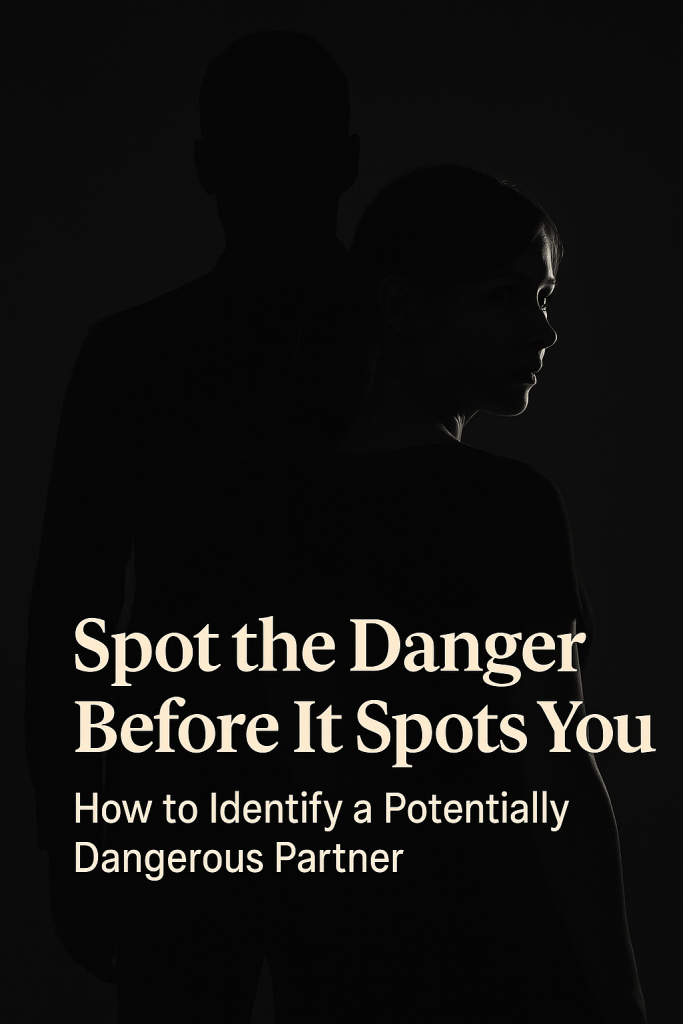
Spot the Danger Before It Spots You – How to Identify a Potentially Dangerous Partner

Monsters don’t wear masks in real life. They smile. They charm. And they wait.
Abusers rarely look dangerous at first glance. In fact, many are experts at blending in, earning your trust, and slowly tightening their grip until you can barely breathe — figuratively or literally.
Here’s how to recognize the warning signs before you get pulled into something you can’t easily escape.

1. They Move Too Fast

If someone is rushing you into exclusivity, talking about moving in together, or declaring deep love after only a few weeks — that’s not romance. That’s control disguised as passion.
Love bombing is one of the most common tactics of abusers. And it works. Many women crave to feel seen and wanted and they often overlook a behaviour that should trigger all the internal alarms they have. And even if they do, they still ignore them. How many of you thought “He’s a good guy, I should stop overthinking”? You’re not overthinking. If it doesn’t feel right, then it probably isn’t.

2. They Test Your Boundaries Early

Pay attention to small acts of disrespect:

Ignoring your “no”;

Pressuring you into things you’re not ready for;

Making “jokes” that cross the line.
These aren’t accidents — they’re tests to see what you’ll tolerate. Once he’s crossed your boundaries, things will never go back to how they used to be and he will always push them further. All the abused women I had encountered during my career always said “maybe this time he will learn his lesson and will stop hurting me”. They never do. Never!


3. They Demand Constant Access

Needing to know where you are, who you’re with, and what you’re doing 24/7 is not love — it’s surveillance.
If they become irritated when you don’t answer immediately, take it as a red flag. Also, asking for access and passwords on your accounts and controlling them. You are not a child that needs constant supervision. A relationship should be based on mutual respect and trust. If he can’t trust you, let him go. Things won’t change further down the road.

4. They Try to Isolate You

Subtle digs at your friends or family.
Discouraging you from going out alone.
“Why do you need them when you have me?”
Isolation is how they remove your safety net. I cannot stress enough how important your friends and family are to support you especially if you are in an abusive relationship. I know many of you bear the stigma of shame. Tell your family, ask for help. It can make the difference between life and death.


5. They Twist Reality

If they constantly downplay your feelings, deny things you know happened, or make you question your own memory — that’s gaslighting, and it’s designed to break your confidence. “You’re crazy; you’re just imagining things”. No you’re not, walk away.

6. They Show Inconsistent Anger

Explosive reactions to small problems, road rage, or cruelty to animals are often precursors to interpersonal violence. Believe what you see, not what they promise. Again, don’t make the mistake to think that they won’t do it to you, they will eventually. And if their outbursts scare you early on, walk away. A full on violent rage episode targeting you is terrifying and life threatening.


7. Do Your Own Research

You don’t need to be an investigator to run basic checks:

Search their name online with keywords like “arrest” or “abuse”;

Look for public social media activity that contradicts what they’ve told you.

If something feels “off,” trust that instinct. As a woman, your instinct is your greatest weapon. Use it and learn to trust it. Your subconscious mind has the ability to process large amounts of data that you may not be consciously aware of but that will render a certain “feeling”. Trust it and run with it.

What to Do if You Spot the Signs

Set boundaries immediately, and be ready to walk away;

Tell someone you trust what you’ve noticed;
If you feel unsafe, contact local support services or authorities.

Remember: leaving early is easier than escaping later.
You are not being paranoid. You are being safe.
And safety is not something you owe anyone an explanation for.
Love should make you feel safe, not scared. Anything less is not love — it’s a warning.

YOUR TEEN ISN’T AS SAFE AS YOU THINK – THE HIDDEN DANGERS THEY DON’T TALK ABOUT

Teenagers are online more than ever. But what they don’t tell you is where they go, who they talk to, or what they hide. The truth is, many dangers are not obvious to parents, and predators know exactly how to exploit that silence.

Where the dangers hide:

  • Discord and hidden communities – seemingly harmless servers can host grooming, dares, and private image sharing;
  • Fake relationships – strangers pretending to be supportive peers, gaining trust to manipulate emotionally and sexually;
  • Dangerous challenges – viral trends pushing teens to self-harm or engage in risky behavior;
  • Trading intimate images – teens pressured into sharing, then blackmailed or having pictures spread without consent.

How teens hide the signs:

  • They change their phone habits (locking screens faster, deleting chats, changing passwords);
  • Mood swings: anxiety, secrecy, sudden irritability;
  • Spending long hours online but avoiding talking about what they’re doing;
  • New “friends” they don’t want to introduce or explain.

What can you do without turning into a policeman?

  • Keep an open channel of communication – let them know you’ll listen before you judge;
  • Teach them the difference between healthy and manipulative behavior online;
  • Set boundaries together. Explain why certain platforms or risks aren’t worth it;
  • Watch patterns, not single actions. One late night online isn’t a problem. A new secret life might be;
  • Remind them that no matter what they’d shared online or done, they can always come to you before it gets worse.

If you are anything like me, you may find yourself asking what Discord is. It is an online communication platform, originally created for gamers, which grew a lot and extended and now is being used by teenagers, online communities, and even companies. How it works:

  • It has servers (thematic groups) where people can join;
  • Each server has audio or text channels (like chat rooms);
  • You can talk with people by text, audio or video. You can send images, files, links;
  • It is free but offers a premium version with extra features.

Teenagers use Discord because it seems much cooler than Facebook or WhatsApp, they can join larger groups (national or international) that share the same interests in music, games or anime etc. The most important feature is that it offers the intimacy experience (private servers, hidden channels, nicknames).

Some major risks that Discord hides:

  • Grooming – adults that pose as teenagers and approach them in public or private servers;
  • Toxic servers – some host pornography, self-harm, dangerous dares or trends;
  • Anonymity – hard to check who is behind an account;
  • Intimate images traffic – pictures might be asked, traded, shared, or sold into hidden groups.

Your teen may act like they know it all but behind the screen; they can still be vulnerable to manipulation, exploitation, and danger. You don’t need to control their every move; you just need to be present, aware, and ready to step in when it matters.

Want to learn more? Check out our resources in the Shop Section.

WHAT PREDATORS LOOK FOR IN A VICTIM

And how to make sure your child isn’t one

We often hear about predators and how they target children and the horrific things they do to them but what nobody is talking about is how they decide to target a specific kid and why. Usually, it’s just about opportunity and nothing more. So let’s take those opportunities away and keep our children safe.

Online predators don’t look for the smartest kids; they look for the loneliest ones. Those who post about being sad, the ones who reply to strangers out of boredom, or those who don’t tell their parents everything.

Predators are opportunists. They test boundaries, push limits, and observe patterns. They study before they strike. Here’s what they often look for:

  • Children who overshare on social media;
  • Children who answer messages from people they don’t know;
  • Children who hide their online activities from their parents;
  • Children who are emotionally vulnerable (sad, angry, lonely);
  • Children who are left unsupervised for long periods of time.

So how do you make sure your child doesn’t become a target?

  • Talk to them regularly, without judgment;
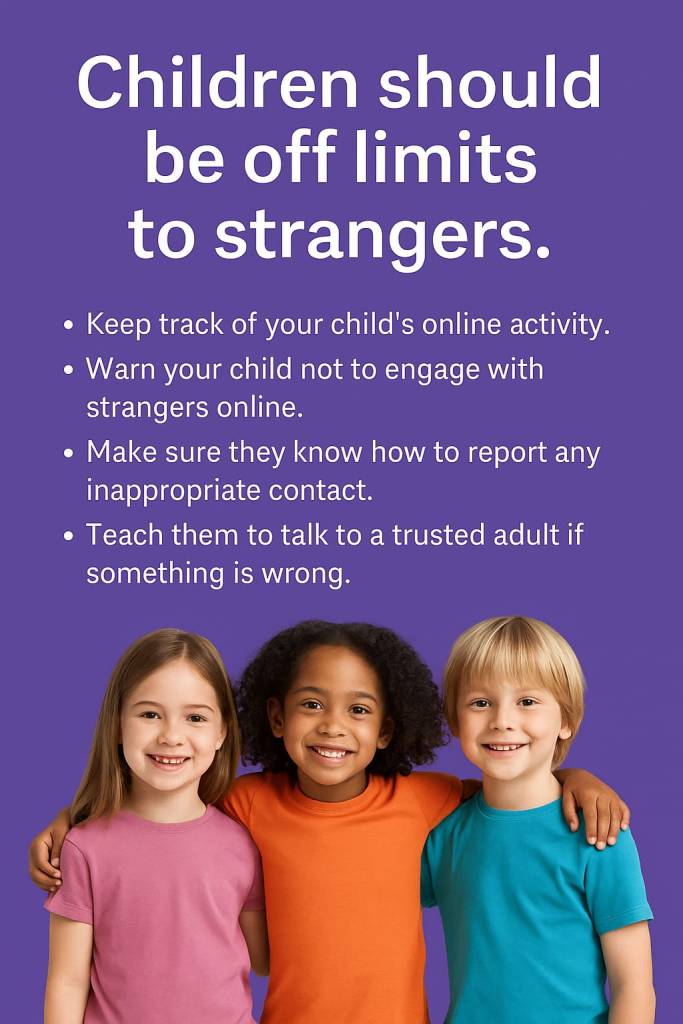
  • Teach them never to engage with strangers online, even if they “seem nice”;
  • Monitor what they post;
  • Watch for sudden changes in behavior, secrecy, or mood;
  • Remind them: “If someone makes you feel uncomfortable, you’re allowed to walk away. You’re allowed to say NO.”

Predators don’t always hide in the shadows. Sometimes, they hide behind emojis, compliments, and fake photos. Your child doesn’t need to be afraid of the internet but they need to know how to survive it.

Want to go deeper? Download the free guide: “Child Safety Essentials – How to protect your kids from manipulation & abuse

Welcome to Empower & Protect!

I’m Elowen Mardis – I worked in law enforcement for nine years, and I have seen many of the horrors this world tries to hide.  I investigated diverse cases and began to observe a pattern: many criminals target vulnerable people, who become even more vulnerable by not being informed. This project was born from a personal desire to empower more people to stand up for themselves and protect those they love.

Our mission is simple:

  • Empower individuals to recognize potential threats;
  • Provide tools and knowledge to protect themselves and their loved ones;
  • Help people overcome fear through awareness and preparedness.

This is just the beginning. Each week, you will find new articles, guides and insights designed to help you stay safe, informed, and resilient.

Explore our resources, join our community, and take control of your safety today.

Empower. Protect. Overcome.